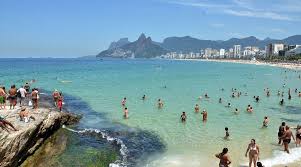
The Story of Ipanema

The Story of Ipanema: From Indigenous Waters to Global Icon

Ipanema’s journey spans centuries, weaving together indigenous heritage, colonial ambition, urban transformation, and cultural revolution into one of Rio de Janeiro’s most celebrated neighborhoods.

Namesake and Origins

The word Ipanema traces back to the Tupi language, spoken by the indigenous peoples of Brazil’s southeastern coast. It combines terms for water (y or ipá) with descriptors meaning “bad,” “stinking,” or “turbid”—essentially translating to “bad water” or “rotten pond.” Despite the unflattering name, likely referring to water quality unsuitable for fishing, the area’s pristine sandy shores made it a natural gathering place for local communities.

The Baron’s Vision

During the colonial and early imperial periods, the land remained largely undeveloped until José Antônio Moreira Filho, the 2nd Baron (later Viscount) of Ipanema, took ownership in the late 19th century. Between 1883 and 1894, he transformed his estate into Villa Ipanema—the neighborhood’s first planned urban settlement. He subdivided the property, mapped out streets, created public plazas, and marketed the area to prospective residents. Interestingly, the neighborhood borrowed its name from the Baron’s existing estate in São Paulo rather than from the local geography itself.

Streetcars and Suburban Dreams

As Rio de Janeiro expanded southward from its crowded downtown core, Ipanema benefited from improved infrastructure. The introduction of a streetcar line in 1902 connected the neighborhood to the city center, making it accessible to the wealthy seeking escape from urban chaos. Throughout the early 20th century, Ipanema developed into a tranquil, exclusive enclave where Rio’s elite built homes and enjoyed peaceful beach days away from the bustle below.

The Bossa Nova Revolution

The 1950s and 1960s brought Ipanema its moment of global immortality. The neighborhood became a magnet for artists, writers, musicians, and bohemians seeking inspiration. In 1962, composer Antônio Carlos Jobim and poet Vinícius de Moraes crafted “The Girl from Ipanema” (Garota de Ipanema) at Veloso Bar—now renamed Bar Garota de Ipanema. The song was inspired by Helô Pinheiro, a young woman who regularly walked past the establishment on her way to the beach. With vocals by Astrud Gilberto, the track became a worldwide phenomenon, introducing bossa nova to international audiences and cementing Ipanema’s status as a cultural landmark.

The neighborhood also cultivated a distinctive beach culture centered around Posto 9, which became a gathering spot for the creative and countercultural crowds. During the 1960s and 1970s, the iconic black-and-white wave-patterned boardwalk (calçadão) was installed using traditional Portuguese stone techniques, adding architectural elegance to the shoreline.

Contemporary Ipanema

Today, Ipanema stands as one of Rio’s most coveted addresses—a blend of residential prestige, luxury retail, fine dining, and nightlife. The Hippie Fair (Feira Hippie), established in the late 1960s, continues to draw visitors every Sunday with handmade crafts, artwork, and local goods.

Yet the neighborhood also reflects Rio’s broader social complexities. While Ipanema represents affluence and cosmopolitan lifestyle, nearby favelas highlight the stark economic contrasts that define much of the city. Tourism brings both vitality and pressure to the area.

A Legacy of Transformation

From indigenous fishing grounds to a baron’s private estate, from an elite residential retreat to a global cultural symbol—Ipanema’s evolution mirrors Rio de Janeiro’s own story of expansion, artistic flourishing, and enduring appeal. Its history encapsulates the city’s ability to blend natural beauty with human creativity, making it a lasting emblem of Brazilian alegria and sophistication.
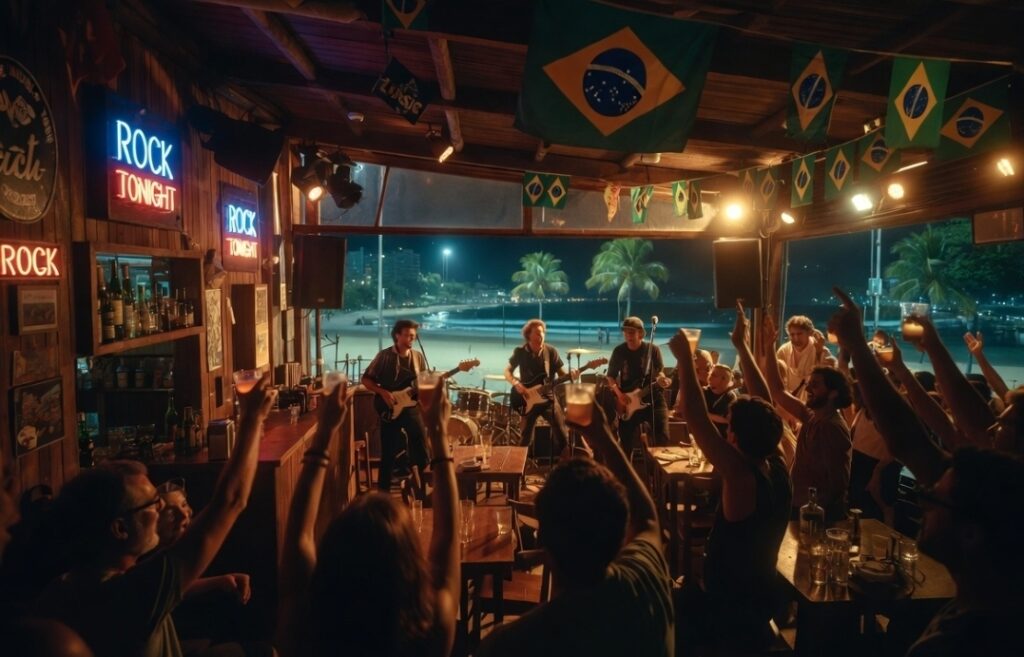
Best Places for Rio Rock

Empório 37 is the top and most traditional spot for rock bands in Ipanema.

  • Address: Rua Maria Quitéria, 37, Ipanema.
  • It’s been operating since 1982 as Rio’s oldest rock house, functioning as a bar, pub, restaurant, and live music venue. Expect live rock bands (especially upstairs), DJs playing rock on the first floor, food, drinks, and a lively crowd late into the night (often until 4-5 AM on weekends).

Other solid options in or very near Ipanema include:

  • Lord Jim Pub (or Lord John, under new ownership but similar vibe): A classic English-style pub at Rua Paul Redfern, 44. It has a long history of rock music, cover bands (e.g., Beatles tributes), and live performances, especially on Thursdays–Saturdays. Great for drinks, pub food, and a relaxed rock atmosphere.
  • Jack Daniel’s Rock Bar: Associated with rock (posters, vibe, and sometimes live music), located near Avenida Epitácio Pessoa in the Ipanema/Lagoa area. It mixes rock with DJs and a fun crowd.

Ipanema itself leans more toward bossa nova (e.g., Vinícius Bar) and beachy/samba vibes, so dedicated rock scenes are smaller and more intimate compared to larger venues in Lapa or Botafogo. Empório 37 stands out as the go-to for classic rock ‘n’ roll energy.

Tips:

  • Check their Instagram or Facebook for the weekly schedule, as lineups change (bands often start around 9-10 PM or later).
  • Rio nightlife can get busy after midnight; arrive early or be prepared for crowds on weekends.
  • Safety: Stick to well-lit main streets in Ipanema at night, use ride-sharing apps like Uber, and watch your belongings as in any big city.

For bigger rock/concert experiences, you might need to head to other neighborhoods or check festival listings like Rock in Rio (usually in Barra). Enjoy the shows! 🎸

Sunrise on Arpoador

Ipanema Flow:


Sunrise on Arpoador: The Ocean Teaches Better Than Any Master

Ipanema, May 2026

The sky is still dark when I arrive. The sand is cool underfoot. Two Brothers mountain looms in the distance like a silent guardian. I unroll the mat, tie the silver hair back, and begin.

No music. No phone. Just the sound of waves and breath.

Most people come to Ipanema for the spectacle — the bodies, the volleyball, the caipirinhas at sunset. I come for the lesson that arrives only when the beach is nearly empty: the ocean does not strive, yet it shapes everything.

This is wu wei in its purest form.

You cannot push the Atlantic. You cannot negotiate with the tide. You can only move with it, or be moved. The best tai chi sessions here are the ones where I stop trying to “perform” the form and simply allow the body to respond to the rhythm of the sea. The form becomes less important than the listening.

There is a particular clarity that arrives after forty minutes of slow movement as the sun breaks the horizon. Thoughts that felt urgent the night before dissolve like foam on the sand. What remains is usually simple:

  • What am I forcing that wants to flow?
  • What am I holding that wants to be released?
  • Where am I still pretending to be useful to a system that no longer serves me?

Zhuangzi would have smiled at this scene. The useless tree survives precisely because no one wants its wood. Standing here at first light, watching joggers rush past while the waves continue their ancient conversation, the metaphor feels literal.

The truly sovereign life is the one that becomes difficult to commodify.

Later, as the beach begins to fill, I walk back slowly. Salt on the skin. Linen shirt loose. The top-knot coming undone in the humidity. A woman smiles as she passes — not because she recognizes anything, but because the posture of someone who has already finished their real work for the day is rare here.

This is Tao Boho, not as aesthetic, but as daily practice.

The empire may continue its noisy decline elsewhere. Here, at the edge of the continent, the Atlantic keeps its own time. And for those paying attention, it still offers the oldest instruction:

Stop pushing.
Start listening.
The flow will carry what is meant to move.

The rest is just noise.